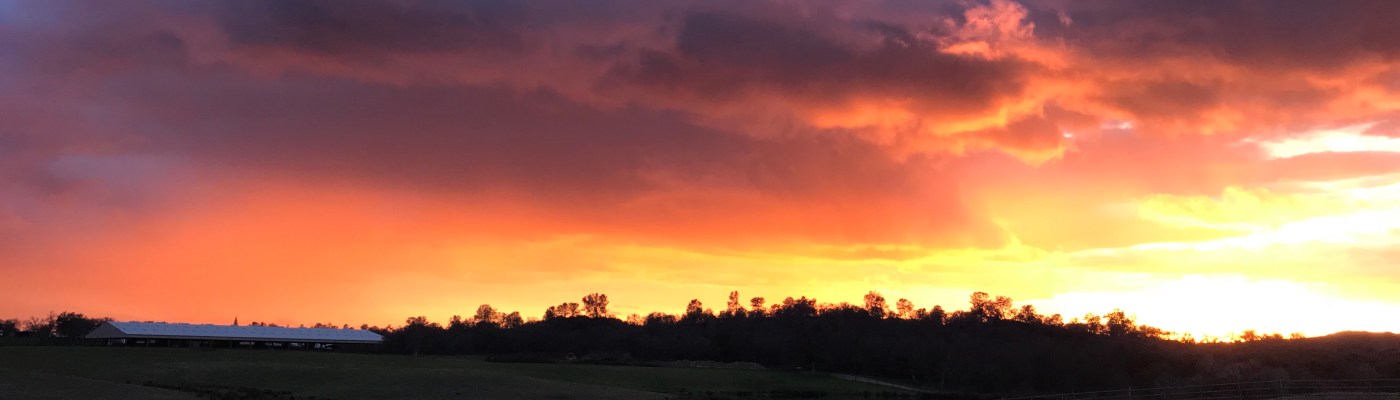
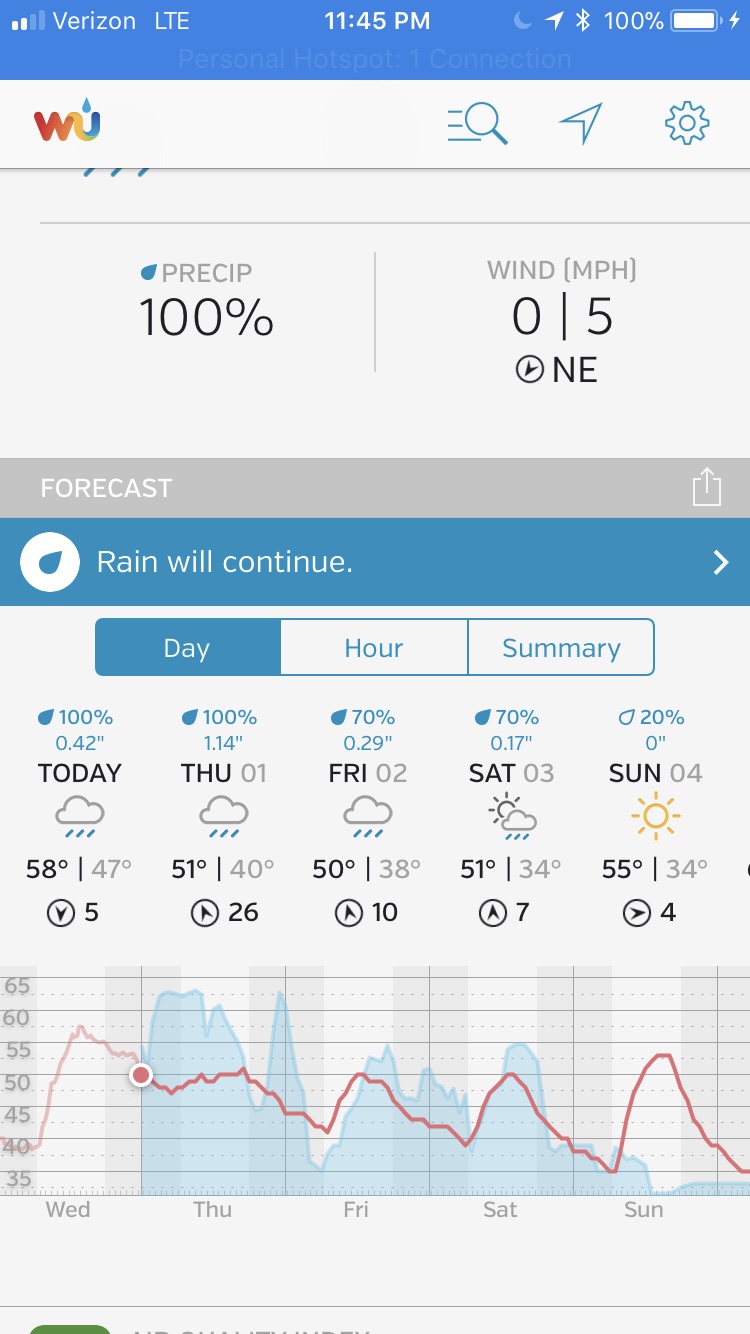
Foal Update: No new babies, I’m slightly grateful purely because it’s been freezing and the thought of jumping out of my warm bed to run out into the frigid barn makes me cringe. I do it because I love it, but I also love feeling my face. Say a little prayer for my extremities people, these ladies are overdue and waiting for the big storm to hit, I know it.
I have an active imagination, not as awesome as my cat’s (whom is currently thoroughly enjoying a piece of straw on the floor..), a good enough of one to crack myself up from time to time to say the least though. A lot of writers will talk about “writers block” but what most won’t talk about is how that is accompanied by “A.D.D.” and a little bit of gluttony (ok maybe that’s just me). There have been times when I’m not quite sure what I should write about, which leads to watching a movie, cleaning the house, or deciding it’s a good time to call everyone I know until someone picks up. This is followed by boredom eating, which sounds like a good idea at the time, it’s not. This sort of happened to me this past weekend when I was hatching my blog for this week. Work sort of got in the way and so did cleaning the house (it really needed to be done). Then like a lightbulb being flipped on, I thought I’d shed some light on how lights make breeding horses so much easier. Confused yet? Good. Let’s get over-exposed.
Quick background: Mares are seasonal polyestrus or “long day” breeders, this means they are reproductively active during spring to summer months (they do not cycle during the fall and winter months). Once the days become longer there is a chemical shift of melatonin in the brain. This will stimulate the production of reproductive hormones that will cause the mare to come into “heat” or estrus. Fun fact- the word “estrus” originated from the Greek word meaning “gadfly, sting, or frenzy”. The Greeks knew what they were doing, also I can’t say “from the Greek word for” without thinking about ‘My Big Fat Greek Wedding’ and how the father always tries to show how the root of any word is Greek. My mother’s side of the family is Greek so that movie speaks to me. If you haven’t seen it, buy it, it’s that good and you’re missing out on life.
(I don’t own this video, but I had to share it from YouTube just so you can get a taste)
Mare’s typically will be cycling from April to October, they also go through a “transitional” phase in early spring where they will develop a handful of follicles but won’t ovulate. During this time they may show some erratic behavior or may act like they’re in heat because their hormonal systems are “gearing up” for the good times, but they are faking it. Man, could you imagine if that’s how women were? For one to two months out of the year we were all bat-shit crazy and then boom back to normal for like seven months, and then cold, heartless prudes for like 6 months. You think some women are crazy now, be thankful we aren’t seasonal breeders.
Certain breed associations consider young horses officially a year older on January first, regardless of their actual birthdate. This makes for a race against time to breed mares so they will foal as close to the first of the year as possible. A typical gestation length for a mare is eleven months and get this twisted fact, if you bred your mare too early and she foals in December, legally that foal would turn a year old on January first even if it were only days old. Not ideal. 600 words later and I still haven’t said why the use of light is so cool, keep it together, there’s a lot to explain without sounding like the teacher from ‘The Peanuts’.
Recap: the problem is getting a mare to cycle at the right time so that we can breed her and have her foal out the following year as close to January first as possible. Impossible! You can’t make biological systems bend to your will. Au Contraire! The solution is putting mares under lights to trick their system into thinking the days are longer. “WHAT?! It’s that simple?” Yep.
There are a couple of ways to accomplish this task; The traditional way is to hook up lights in a stall/ paddock that are attached to a timer that will turn them on and off at the appropriate times. The new-age way is put a “light-mask” on you mare that will deliver light directly to an eyeball and she can stay out in the pasture. How much time is the appropriate amount of time? Ahhh… isn’t that the universal question for all things with females? I kid, sort of. Luckily there is a finite answer for mares, it’s 16 hours of continuous light. To get mares cycling earlier than what natures intends, many farms will start their mares under lights December 1st. It takes most mares 60 days of being under lights to gear up and first ovulate, basically you are speeding up that “transitional” phase to have your mares system functioning like it’s May in February.
What counts as enough light? A good rule of thumb is if you can read a newspaper in the corner of the stall or paddock then you’re good to go. Funny side-note, I wish I could have been around when people were creating the words that make up our language. A foot-candle is exactly what you think it is, a unit of illuminance from one light source from a foot away. It’s to boring to say though, I would have called it a fandle, which is why I shouldn’t be allowed to name things. Anyway, 10 foot-candles is a minimum amount of light that mares can be exposed to during this 16 hour photoperiod.
One of my “favorite” phrases, “I just leave my breeding lights on 24 hours and that solves my problem”. Here’s a super Californian phrase for you, “yeah, no”. Here’s why leaving your lights on 24 hours a day to get your mares to cycle doesn’t work. Nerd level- 100 is exposing itself.
The eye’s are the windows into the soul right? Well in mares it’s the window that lets light into the brain. As the exposure to light becomes longer the brain will record this and when the appropriate length is reached it will suppress the release of melatonin from the pineal gland, thus stimulating the hypothalamus gland to produce gonadotropic-releasing hormone (GnRH), let’s call it the Bob Baker hormone. Bob runs the show and dictates who gets to party. When Bob Baker is secreted in sufficient quantities the pituitary gland is stimulated and will secrete Follicle Stimulating Hormone (FSH) and/or Luteinizing Hormone (LH). FSH, let’s call this one the Fabio Hormone, moves along a sweet, steamy ride through the bloodstream down to the ovaries where he stimulates the growth of a follicle (a blister-like structure on the ovary that houses the “egg”). Think of a follicle as a safe-house for the “egg”. Once that safe-house reaches 20-25 millimeters in diameter it will begin to secrete estrogen, this one we will call Missy Elliott. Missy Elliott is like the hype-man for the reproductive tract, it affects the behavioral centers in the brain, and preps the reproductive tract to welcome, carry, and deliver the “spermies”. She also puts the lock down on the pituitary gland to stop releasing any more Fabio and start spitting out LH, which can best be described as the Paula Dean hormone. Paula really puts the “icing-on-the-cake”, she helps that follicle mature and facilitates ovulation.
Ovulation involves the follicle will popping, the egg rocketing out of it’s safe-house and entering the oviduct, the creepy hallway where “spermies” will attack it. You know how they say you shouldn’t pop a blister, well this blister has to pop to make a baby so move over medical professionals. Our little “egg” is ready to go out and destroy that mares perfect body. Post ovulation, Missy Elliott will quiet down and the remains of the “safe-house” are now called a corpus luteum (CL) or “yellow body” due to the color. The cells within the CL (luteal cells) secrete progesterone. Progesterone plays a huge role in setting the stage for maintaining pregnancy, let’s call it Oprah. Post ovulation Oprah comes in full force to shut down the production of Fabio and Paula from the pituitary. When all this is said and done the mare will no longer be in heat and no longer wants it! Naturally what happens next depends on whether she gets pregnant or not. If she doesn’t then she will remain under Oprah’s presence for 12-14 days. At that time if there is no embryo present the lining of the uterus will secrete prostaglandin, the Lora Croft hormone, which will destroy the CL like a tomb raider dominates boobytraps and thus shutting down Oprah’s rein. Without Oprah to command the party, Fabio waves his luscious locks once more and gets the party started all over again. ISN’T SCIENCE FUN?!
Back to the pet peeve of 24 hour lights! Leaving your mare under lights for longer than 16 hours is of no additional benefit other than to your electricity company. Eight hours of darkness allow the reproductive cycle to properly function physiologically. As you can see there is a lot involved (so much more than what I laid out, it’s just too much to bore you with). It’s a delicate process and can be fickle. So when I hear that peeve-y little phrase, I just laugh at the lack of nerd quality and pity the fool and their electricity bill.
Ok so lights are cool and all but what about those light-masks you mentioned earlier? It’s not like those weird inferred lights masks that people are using these days to do whatever to their faces. These masks are called Equilume Masks, and they are proving to be an intriguing tool in the world of horse breeding. I have some mares under lights in stalls (with turn outs during the day), and some mare with Equilume Masks on living out in the pasture. Generally a 200 watt incandescent lightbulb will get the job done when using lights in stalls or paddocks. The Equilume Mask delivers low intensity blue light to the right eye daily from dusk to 11pm each night. A big benefit is that once fitted with this mask your mare can stay out in the pasture and doesn’t have to be brought in racking up your electric bill. Research has shown these mask also have added benefits of timely gestation (shortening), healthy foal weights (higher), and assisting in getting barren and maiden mares to cycle/ conceive earlier than with putting them in stalls under lights. Here is one of our mares fitted with an Equilume mask living it up in the pasture.


I’ll be comparing the two “test” groups as we dive into breeding season, I’ll keep you posted on who wins the estrous race.
It’s late, and with how my luck has been going lately I’ll fall asleep and be woken up within 30 minutes to the Foalert going off. So I sign off with, next time you are enjoying the first few warm days of spring be reminded of this blog and how lucky you are that you aren’t a seasonal breeder. Unless that sounds appealing to you, then you may sulk.
–The Equine Midwife.
 The Equine Midwife