Hey ya’ll!
Exciting update! Our first mare has started to wax! Why is this exciting? “Waxing-up” or simply “waxing” is colostrum (antibody enriched, first-milk) that has oozed out of the teats and has a wax-like appearance, usually occurring in the last few days of pregnancy. Waxing is not a full-proof indicator that your mare will foal right away, sometimes they can wax a month prior or sometimes not at all. In this case it’s exciting because it means we are one step closer to our first foal. She hasn’t shown much change in the last week and it’s been driving us mad and has us dancing in our boots at the same time. Here’s what waxing looks like:

I’ve had my eyes on our mares like a hawk on prey, but now I’m channeling my “x-ray” vision. So now, we wait. And wait. Impatiently. Whoa! ok, tone it down, it will happen.
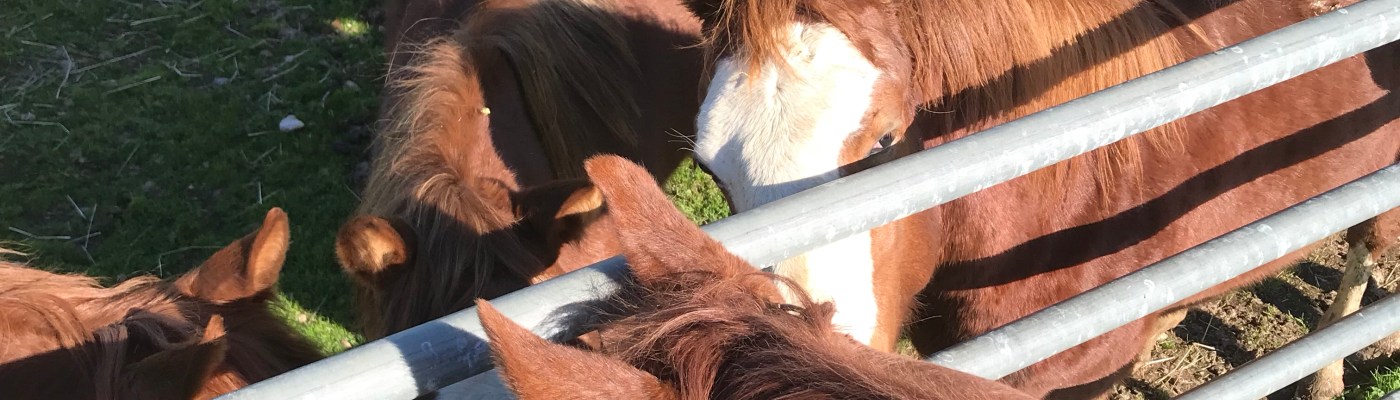
You’re probably wondering why I titled this post “Chickens”. I learned from a very good friend of mine from college that nicknames are not only fun, but also feed the soul with joy. Unless it’s high school.. teenagers can be cruel. I call our weanlings-yearlings chickens. They grow up in a pasture setting together and when I roll up with the grain cart in the morning to feed them they remind me of chickens flocking to feed. So, chickens it is! Of course each one acquires their own nickname as I get to know them, or they do something ridiculous/ hilarious and it stays with them forever. For example, we have a yearling named Wilber, I call him Wilberito which then turned into Burrito. It fits his personality.
So why am I writing about my “chickens”? From the moment they are conceived to the moment you swing your leg over them for the first time, they are our future. There are endless opportunities for what a foal can become when it hits the ground; performance horse, ranch horse, therapy horse, lesson horse, pack horse, race horse, cart horse, the list goes on. We make our living based on the successful delivery and upbringing of these foals. It’s not about the money, though for some it might be, for me getting paid to work with horses is beyond words for how complete it makes me feel. These “chickens” will grow to be the bread winners of the ranch.
Birth- to me, it’s a beautiful process, but I’m a total nerd for science so you may have a different opinion than I. I’m hoping I’ll be able to photo/video document a birth for you all, but don’t hold your breath at this point. When it comes to foaling, nothing is certain. I do have some past footage that should keep the impatient readers at bay.
There are three stages to foaling;
Stage one- can take anywhere from one to four hours and is arguably the most annoying time to watch a mare. First she will look like she is mimicking colic (abdominal pain), she may lay down and get up multiple times, pace her pen or stall, sweat, and act nervous. Every mare is different and may not display all these signs but you will notice a distinct change in their behavior during this stage. The reason I say it’s annoying is because mares can prolong this stage for as long as she feels threaten or uncomfortable, so standing there and staring at them will only make you feel like you are trying to watch a pot of water boil. “The foal determines the day, the mare determines the hour”. Mares 95% of the time will foal during the night, it’s the safest time in terms of risk from predators. Also the most inconvenient time for human, but I’m not complaining. This is when our Foalert system comes in handy, we are alerted at the end of this stage and the beginning of the next. Yippee!
Stage two- this stage encompasses the water breaking to the foal being delivered. This stage, normally, can occur very quickly, 15-20 minutes. Which seems insane considering that’s a big ol’ baby being pushed out. Fun story, in college I was on foal watch during a sunny afternoon, studying for Equine Exercise Physiology. I did my routine rounds of checking the mares that were due to foal soon, all was quiet. Not 15 minutes after I returned to studying a little girl came running up to the student lounge door, “Um, there’s legs.. coming out!” It took me 5 seconds to realize what she was saying, I grabbed a halter, rushed through the foaling stall to the outside attached pen to find one of the mares down and two little legs poking out. I quickly haltered the mare, got her up, brought her into the foaling stall, initiated the phone tree of my fellow foaling enterprise students and waited. Foaling consists of a LOT of waiting, makes it difficult for an impatient person such as myself but I’m still here loving what I do, something must be right. For many this was the first time seeing a birth in action, it couldn’t have been better timing. I documented as much as I could but also relished in the moment, this time was not my first live birth but every time feels the same, exciting. I’ll share these photos but fair warning there is some blood, and then a whole lot of cuteness!
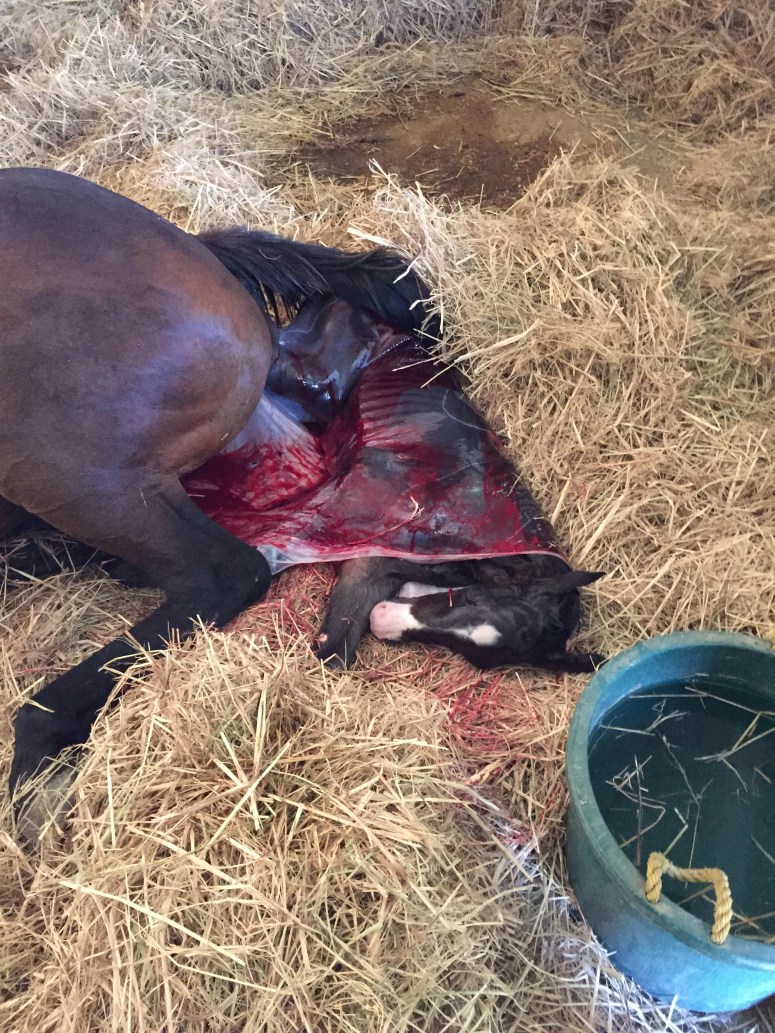
From the time I got her into the stall, to the time this photo was taken was about 15 minutes, she wasted no time. The video below was attempt number two of trying to stand, note the adorable tongue action, little bugger was hungry!
Houston we have liftoff!
There’s a common rule of thumb, you want foals to stand within one hour of birth, nurse within two hours and pass the meconium (first pooh) within three hours. This big guy had no problem with any of it.
Are you overloaded with the level of adorableness yet? Good, it’s never going to stop.
Stage three- is all about the placenta. The stage you’ve all been so excited about, I’m sure. Your mare should expel the placenta anywhere from one to three hours post foaling. I don’t have any cool videos of this happening, yet. You’re probably exhaling with relief, don’t be so quick! Heres a photo of my partner and I from college checking a recently expelled placenta for any abnormalities. You’re welcome. It’s nature.

Check out that coordination with our squats.
Remember how I sung praises for not having to watch monitors or stare at mares through a window anymore? Here’s the human side of the foaling process. Sleepless nights, mean getting up about every 20 minutes to walk around and check mares, for months. This means work a normal day and then sleep maybe a total, nonconsecutive 3 hours. You get pretty good at handling sleep deprivation. I’d consider myself prepared for having kids or getting another puppy, and possibly dying at a young age from the lack of sleep. That escalated quickly..
The best part is usually you’ll walk around and find no foals have been born, just to have one drop and foal out the second you walk away. Mares are like that. No matter how irritated, tired, or down-right emotionless you may be at that time, the second that foal appears, without complication, everything is washed away. There’s no going back to sleep right away though, unless you only have on mare to foal out and all three stages have gone off without a hitch. You are the lucky ones. For the rest of us, we are continuing the cycle of waking up and walking around every 20 minutes throughout the night. All so we can have adorable moments like this.
The first few days post birth are the best, foals are spunky, figuring out how to lay down “gracefully”, and learning what humans are. The first time the foal learns how to really use their legs has to be about the cutest thing on the planet, but I could be slightly bias. I have endless videos of these moments and I’ll share them in time.
So here we wait. I hope to bring you news of baby number one the next time we meet. I’ll remind our mare that people are waiting and she is making us all a little stir crazy. I’m sure that will make her go into labor.
-The Equine Midwife
P.S. I do have a video of a mare giving birth, I figured this post had enough “nature” in it, for now. I know you can YouTube anything these days but in the event that enough of you are brave souls I will post it! Give me your feedback.
 The Equine Midwife